Showing posts with label Technology. Show all posts

Monday, July 10, 2017

Machine Learning and Marketing In Today’s World

[caption id="attachment_4626" align="alignright" width="300"]Old fashioned marketing Pixabay[/caption] The old way of managing data, improving intelligence gathering, and creating more ways to be efficient in an effort to increase revenue, brand awareness and engagement is soon to be part of the marketing archives. In today's wave of technological change, artificial intelligence (AI), machine learning (ML) and marketing are becoming intertwined. The two words are many times thought to be interchangeable, but there are differences between ML and AI. Machine learning is a subset of artificial intelligence that allows the training of algorithms by a computer, so that when data is entered into the system, it will figure out what the best course of action is and continually improve upon it. AI has a more broad definition. To oversimplify the contrast, it is basically a computer program that does something smart. In the case of Big Data, which is the massive amount of data being analyzed in order to improve how our personal lives, business, and ultimately our world operate, machine learning is at the forefront of these sweeping changes. The following article discusses some applications of Big Data:

What is Big Data

  • Companies use big data to better understand and target customers by bringing together data from their own transactions as well as social media data and even weather predictions. [caption id="attachment_4627" align="alignright" width="300"]Using Big Data for Marketing Decisions Wikimedia Commons[/caption]
  • Businesses optimise their processes by tracking and analysing their supply chain delivery routes and combine that data this with live traffic updates.
  • Others use machine data to optimise the service cycles of their equipment and predict potential faults.
  • Big Data is used in healthcare to find new cures for cancer, to optimise treatment and even predict diseases before any physical symptoms appear.
  • Big Data is used to analyse and improve the performance of individuals (at sports, at home or work) where data from sensors in equipment and wearable devices can be combined with video analytics to get insights that traditionally where impossible to see.
  • Police forces and security agencies use big data to prevent cyber attacks, detect credit card fraud, foil terrorism and even predict criminal activity.
  • Big Data is used to improve our homes, cities and countries by e.g. optimizing the heating or lighting in our homes, the traffic flow in our cities, or the energy grit across the country.
See the full post here:  What is Big Data
The use of Big Data is fundamental in finding solutions to these problems, helping make our personal and professional lives more productive. Even though it is a fairly new buzzword, ML has been around for quite some time now. Another term that is used in conjunction with machine learning is neural networks, which is a computer system modeled after the human brain. The concept of machine learning and neural networks were developed in 1950's, but it wasn't until the early 90's that it became more popular. Even a Excel spreadsheet can be used for machine learning, as seen in the following video:
What a great representation of how marketers can analyze data and use it to their benefit.  That is why an online marketing specialist is so valuable to a business owner in Denver or anywhere in the world. Spending the day evaluating and testing to find the best solution isn't something most CEO's have time for. They are busy managing everyday tasks and long-term goals, and they need to assign certain aspects of the company to others. This description sums up machine learning and marketing in today's world:

How Machine Learning Will Be Used For Marketing In 2017

Machine learning techniques are being used to solve many diverse problems, and we stand to benefit as we move towards a world of hyper-converged data, channels, content, and context -- having the right conversation at the right time with the right person in the right way. For us marketers, ML is about finding nuggets of "predictive" knowledge in the waves of structured and unstructured data.

Read the full post here
[caption id="attachment_4628" align="alignright" width="300"]machine learning and marketing Pixabay[/caption] The Senior Vice President of Ads and Commerce at Google, Sridhar Ramaswamy, stated "We can apply our data, intelligence, and scale to help marketers deliver the most useful messages for each and every micro-moment." Wouldn't it be nice to have a crystal ball to foresee these micro-moments? Well, you can have the next best thing...it's called machine learning. Embracing Big Data is overwhelming and somewhat confusing, but is a critical component for online marketing. Start small, as the video mentioned, and work your way into more complicated calculations. If you are just starting out and not sure where to begin, find a mentor to learn from. Having an intelligent group of like-minded people that you can bounce ideas off of and glean information from, such as a master mind group, will also help the lone marketer to not feel so alone.  

Machine Learning and Marketing In Today’s World Find more on: http://ift.tt/13eIL48

Tuesday, July 4, 2017

Mobile Shopping Trends and Apps

The term m-commerce (mobile commerce) was being talked about as far back as 2014, but it started to become a reality in 2016 when mobile surpassed desktop usage. In a very short amount of time, the focus for retail stores and their marketing campaigns has shifted to mobile devices. As of October 2016, adults have been spending more online time on their mobile devices compared to on a desktop computer, but 85% of the online money still spent was via desktop.Computer vs mobile Why is there a lag in mobile catching up to desktop when it comes to actually making a purchase? This article from Business Insider provides some insight:

The Rise of M-Commerce: Mobile Shopping Stats & Trends

Multiple factors contribute to this poor mobile shopping experience. The most prevalent of these is smartphones' small screen size. This makes product details difficult to read and payment information frustrating to enter, especially because many sites are not mobile optimized. This is far and away the main reason that customers give up: completing a purchase on a phone just takes too much work.

Speed is also a problem. Mobile users often shop on the go, which provides convenience but also puts them at the mercy of spotty Wi-Fi and LTE connections. And finally, users feel less secure when entering their payment information on a phone when compared to a desktop or laptop.

Read the original post here:  The Rise of M-Commerce: Mobile Shopping Stats & Trends

As companies are striving to improve the mobile shopping experience, mobile apps are a big part of the push. Sites that can seamlessly integrate with the making a purchase are grabbing the attention of the generation that are the future consumers. With thousands of new apps coming out every day, it's no surprise that there are a lot of them geared toward making buying easier via mobile. In 2016, the average person has approximately 25-30 apps on their smartphone, and app stores saw record numbers of downloads and purchases in the first quarter of 2017. Finding ways to encourage people on the go to make a purchase is the goal, and offering a way to compare prices so people know they're getting the best deal is a very prudent way to guide them toward your site. Amazon and others have apps that do just that:
Other companies that have impressive shopping comparison apps are Ebay, OfferUp, Groupon, Wish and Walmart. My parents were big on comparing prices and getting the best deal, but finding what you want at the best price is much easier now and the younger generation is definitely on board. Catering to the millennial age group is one of the most talked about marketing topics, mostly because 85% of them own a smartphone. They are much more apt to find a hotel or restaurant and book a reservation with their phone, whereas the over 35 age group would be more likely to get on their computer to manage such tasks. Because they grew up with social media, they use it to their advantage when it comes to checking out what others are saying about a company they may potentially do business with. They aren't into the traditional method of being sold to and prefer engaging with a brand online before handing over their hard-earned money. This article provides more insight on marketing to millennials:

10 Tips for Millennial MarketingMobile marketing trends and apps

Advertising companies have moved their efforts to the digital world in order to reach millennials. While a vast number of the population find online advertising to be credible, only six percent of millennials in the U.S. consider online advertising to be credible. For this reason, marketers need to figure out how to target millennials online. Some marketers have catered to this demographic by creating faster mobile loading times and eye-catching content that fit into every mobile screen.

Sixty-six percent of millennials follow a company or brand on Twitter, and 64 percent like a company or brand on Facebook with the sole purpose of getting a coupon or discount. Something that millennials have mastered is the way to cut costs in this economically-driven time. That’s why this group is most likely to share their location on their mobile devices in order to receive coupons from businesses that are close by. Chances are, if you advertise a sale or give out free shipping coupons, the clientele will follow.

Find the full post here:  10 Tips for Millennial Marketing

When it comes to mobile shopping trends and apps, the future is wide open. Offering mobile coupons and other deals to entice a buyer to make a purchase is a great way to reach the younger generation. Word of mouth spreads very quickly these days, so making sure you are managing your social accounts and engaging with users will help to gain loyalty and improve the chance of making a sale in the eyes of these mobile-only individuals.

The article Mobile Shopping Trends and Apps was originally published to S&S Pro Services

Tuesday, June 27, 2017

Is Using Adwords Worth It?

Google seems to be the almighty and powerful ruler of the online world. They give away many of their products for free, making them a little hard to compete with, especially for small business startups.Google Search With all of their resources, including their brand value of 101.8 billion dollars, Google has become so dominant that it is hard to imagine anyone ever taking them down. It will happen someday, though, just like it happened to Sears, Kodak, and other brands. Here is just a sampling of the top 16 services Google offers, some free and some paid:

Top 16 Most Popular Google Products And Services - eCloudBuzz

  1. Google Search Engine
  2. Google Chrome
  3. Gmail
  4. Android
  5. YouTube
  6. Google Adsense
  7. Google Drive
  8. Google Adwords
  9. Google Maps
  10. Google Public DNS
  11. Google News
  12. Google+
  13. Blogger
  14. Google Docs
  15. Google Books
  16. Google Translate

Read the full post here:  Top 16 Most Popular Google Products And Services - eCloudBuzzIs using Adwords worth it

If you haven't tried using some of these platforms, you should consider checking them out. One in particular that is good for business is Google Adwords. If you aren't familiar, it is an advertising service that enables businesses to set a budget for advertising and only pay when people click the ads, also known as pay-per-click advertising. Paid advertising is also the bulk of Google's revenue. In 2016, it amounted to almost 80 billion dollars. There have been constant tweaks to the service, and in March of this year they changed how their exact match keywords and close variants of those phrases work, helping advertisers get more focused clicks. If you do plan to check out Adwords to see if it is a good fit for your company, you better be ready to set aside a chunk of time to learn how it works. Like maybe...a year or two! Seriously, though, it is such a robust platform that once you start clicking, you may get lost in the sea of options. It wasn't always that complicated but since they changed their interface in 2009, they have added so many new features that it isn't very friendly to the novice user. There are tabs inside of tabs, scrolling menus, and links scattered all over the page. The good news is that Adwords has their own tutorial series and it is geared toward beginner users. This is the Step 1 Video on how to create an Adwords campaign:
Before you begin, you need to have a gmail account and a website for your business. Then you go to http://ift.tt/mYita6 and click the Start Now button. The site will guide you through the basics of signing up. The real key to getting started with a Google Adwords campaign is doing keyword research to find phrases that online shoppers are searching for. The keyword suggestion tool included in Adwords is where the complexity begins, but you cannot skip this step or you will just be throwing your money away. This post offers some advice when researching what keywords to focus your campaign on:

How to Create a Profitable Google AdWords Campaign (from Scratch)Business Revenue from Adwords

The keyword tool acts much like a thesaurus. You enter in phrases you think your prospects are searching, and Google tells you other similar, relevant phrases. Google also will tell you how often people search these phrases, how competitive the keywords are in AdWords, and how much it’ll cost to advertise on each keyword. All of this information will help you determine which keywords you want to use in your first campaign.

Before you start using the tool, make sure the Advanced Options are set. If you’re in the United States, then set the Location to United States and set the Language to English. The Device should default to desktops and laptops, which is what you want unless you’re targeting only mobile devices. Next, click on the Columns drop down menu and make sure to check Competition, Local Monthly Searches, and Approximate CPC (cost per click). Local Monthly Searches will show the searches in the United States (if you picked the U.S. in the Advanced Options). Plus, you’ll see the AdWords competition and the cost per click for each keyword. This will help you analyze the keyword opportunities.

See the full post here:  How to Create a Profitable Google AdWords Campaign (from Scratch)

After you follow the above steps, enter the optimal keyword phrase you think your customers might type in when searching for a business like yours. At that point you need to decide whether there's enough search volume on that keyword and whether you can afford it. Honing in on the best keyword phrase to fit your situation and one with high buyer intent will help you to get the most out of your Adword dollars. You can literally spend hours doing this type of research to find that perfect search term. Is using Adwords worth it? The answer is yes, but the time you need to spend learning the system may not be. Most businesses in our area hire a Denver online marketing agency to manage their pay-per-click advertising campaigns so they can focus on running their company.    

The following post Is Using Adwords Worth It? See more on: S&S Pro Services LLC

Tuesday, June 20, 2017

Amazon’s New Services & Acquisitions

Amazon, the online giant, has been busy lately and they appear to be somewhat unstoppable.  Right now Amazon is the third most influential stock with the S&P 500 behind Apple and Alphabet...some pretty elite company.Amazon New Services & Acquisitions Their shares have gone up 32% this year, including a 2.4% jump with their recent announcement  last Friday that they plan to buy Whole Foods for 13.7 billion. This is by far and away their biggest acquisition, with their previous biggest purchase of Zappos at 1.2 billion in 2009. That deal isn't official yet, as it seems other online stores such as Walmart might have something to say about the Whole Foods' purchase, even possibly throwing their hat in the ring. No matter what, though, Amazon is on a mission to become much more than the leader of the consumer discretionary sector. Here is a list of Amazon acquisitions in the last 3 years according to CrunchBase.com:

Three Yeas of Acquisitions By Amazon
As you can see from the statistics, the amount they purchased most companies for is unknown, meaning that they base their disclosures on their company's revenue, assets, and net income. In other words, the bigger the company, the less they have to individually disclose, and Amazon loves to keep their activities under wraps. So back to the jaw-dropping investment in Whole Foods. It appears that Jeff Bezos is a genius with his theory that cash flow is king and net income is discretionary. They have, however, posted solid earnings of eight straight quarter of profit, but this is widely due to the cloud-computing business, Amazon Web Services (AWS). Mr. Bezos is always willing to operate on a thin margin and reinvest much of the profit back into the company. The video below gives an excellent rundown on Amazon's recent offer to buy Whole Foods:
With Amazon having their iron in just about every type of retail fire, I'm not sure how they are able to keep up. It probably helps that they have almost 350,000 employees working for the Seattle-based company, but as they keep moving into new sectors can they continue to recreate each one? They have a presence in everything from apparel to outdoor furniture, home goods to electronics, and now they are in the perishables market with Amazon Fresh. This followed on the heels of Amazon's Prime Pantry, where Prime members can shop for groceries and household goods while still receiving free shipping with a certain minimum order. [caption id="attachment_4592" align="alignright" width="300"]Fresh Fruit and Vegetables Pixabay[/caption] With Amazon Prime Fresh, you pay an extra fee of $15 per month to browse perishables, household products, and gourmet specialty items from the Amazon Fresh page that are delivered that day or the next day, depending on what time of day the order was placed. They also resurrected their Amazon Dash Wand to include Alexa, the virtual personal assistant that lives inside the Echo as well as other Amazon devices. The Dash Wand can be used by speaking to Alexa about foods you want to stock up on, but it can also be used to scan a barcode, which will also included in your cart. Is the Dash Wand an expensive item?  You will be pleasantly surprised. Check out this post from TechCrunch:
Amazon’s Dash Wand barcode scanner returns with Alexa and is now essentially free | TechCrunch

At the moment, the item is available for Prime Members only. And it’s essentially free (for a limited time), priced at $20 and shipping with a $20 rebate off your first Amazon purchase after registering the thing. It also comes with a free 90-day trial of AmazonFresh. So the device is a gateway to both Amazon’s $15 a month grocery service and a free new back door for getting the company’s smart assistant into more homes.

See the full post here:  Amazon’s Dash Wand barcode scanner returns with Alexa and is now essentially free | TechCrunch

If you want to see a demonstration of how this Amazon service works, watch this short video:
Amazon's new services and acquisitions are causing a buzz in both the online and brick and mortar world. They are definitely on a roll! On top of it all, their customer service is amazing. Amazon is making some of the other big retail chains break a sweat to catch up. There's no doubt in my mind that Amazon is one of the most innovative companies of all time.

The following article Amazon’s New Services & Acquisitions was originally seen on http://ssprosvcs.com

Wednesday, June 14, 2017

How Google is Using Machine Learning to Lower Energy Usage

In a time period when global warming and climate change are on everyone’s mind and a rather important topic of discussion, Google is stepping up to do their part. It’s no surprise that by using machine learning, they are helping the environment. This basically means that they are using artificial intelligence (AI) to cut their energy usage as opposed to humans doing the same job.
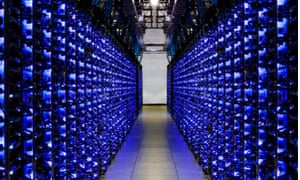
The amount of energy that is saved in their massive data centers across the globe is 15% so far.  By using DeepMind technology, an AI company that Google purchased in 2014, they are able to anticipate incoming higher-than-normal data loads and then cool the system before it gets past the point of needing a big surge of energy to do that.
How many jobs were lost?  That isn’t mentioned in the following article from The Guardian, but it is fascinating how Google is using machine learning to lower energy usage. It sounds pretty futuristic, but Google never fails to amaze me with their integration of AI technology.

Google uses AI to cut data centre energy use by 15% | Environment | The Guardian

https://www.theguardian.com/environment/2016/jul/20/google-ai-cut-data-centre-energy-use-15-per-centGoogle says it has cut its vast data centres’ energy use by 15% by applying artificial intelligence to manage them more efficiently than humans.
The servers that power billions of web searches, streamed films and social media accounts are estimated to account for approximately 2% of global greenhouse gas emissions. Google is believed to have one of the biggest fleets of them in the world.
On Wednesday, Google said it had proved it could cut total energy use at its data centres by 15% by deploying machine learning from DeepMind, the British AI company it bought in 2014 for about £400m. Such centres require significant energy for cooling, as well as constant adjustments to air temperature, pressure and humidity, to run as efficiently as possible.
Mustafa Suleyman, DeepMind’s co-founder, said that the level of complexity and number of variables meant the job of managing data centres was one where an algorithm could outperform a human.
He said: “It’s one of those perfect examples of a setting where humans have a really good intuition they’ve developed over time but the machine-learning algorithm has so much more data that describes real-world conditions [five years in this case].
“It’s much more than any human has ever been able to experience, and it’s able to learn from all sorts of niche little edge cases seen in the data that a human wouldn’t be able to identify. So it’s able to tune the settings much more subtly and much more accurately.”
Suleyman said the reduction in energy use was achieved through a combination of DeepMind more accurately predicting the incoming computational load – ie when people were mostly likely to request data-hungry YouTube videos – and match that prediction very quickly to the cooling load required. “It’s about tweaking all of the knobs simultaneously,” he said.
The environmental impact of the online world has come under increasing scrutiny in recent years, as data centres’ share of global emissions has risen to be on a par with those from aviation. Google first disclosed its carbon footprint in 2011 – it was roughly equivalent to Laos’s annual emissions – and says that since then its data centres have improved so that they get 3.5 times the computing power for the same amount of energy.
The trial using machine learning to further cut those data centres’ energy – and carbon emissions – began two years ago, and was tested on “more than 1%” of its servers, Suleyman said. It is now being used across a “double-digit percentage” of all Google’s data centres globally and will be applied across all of them by the end of the year.
Google does not disclose exactly how much energy its data centres use, but says as a company it’s responsible for 0.01% of global electricity use, and much of that is data centres. DeepMind has cut Google’s energy use for cooling by 40%, and total energy use by 15%.
“I really think this is just the beginning. There are lots more opportunities to find efficiencies in data centre infrastructure,” said Suleyman. “One of the most exciting things is the kind of algorithms we develop are inherently general … that means the same machine-learning system should be able to perform well in a wide variety of environments [such as power generation facilities and energy networks].”
Google is also using renewable energy to save money. This interview with  Google’s Head of Energy Strategy explains that the deals made with renewable energy companies are long term and will help save a significant amount of money. She noted that the cost of solar has come down 80% in the last six years and the price of wind energy has come down 60% in the same amount of time:


In this Tweet, which is linked to another similar article by Bloomberg, the process that DeepMind uses is compared to that of playing a video game, where the end goal is to achieve the “highest score” of saving energy. It also mentions that although Google is helping the environment, they are also helping their own bottom line with big savings in electricity costs at their data centers.
Content originally posted on S&S Pro Services

Tuesday, June 13, 2017

Google’s Family Calendar – Part of the Family Library

I use my Google Calendar for everything from business and doctor appointments to birthday and anniversary reminders. In fact, I don't think I could manage my busy life without it, and I can't imagine going back to writing everything down on a physical calendar or in a planner. [caption id="attachment_4577" align="alignright" width="300"]Google Calendar Pixabay[/caption] With the introduction of virtual assistants, you can take it a step further. If you happen to own an Amazon Echo, you can ask Alexa to read your upcoming calendar events. All you have to do is download the Amazon Alexa app and connect it to your your calendar of choice, and she will let you know what you have coming up on your schedule without you having to look it up. For families, my favorite calendar app has gone to a whole new level with Google's Family Calendar.  Shortly after the I/O Developers Conference, which was held this year in Mountain View, CA from May 17 - 19, 2017, Google announced additional Family Library settings with Calendar, Keep, and Photos. The original Family Library was launched about a year ago, allowing up to 6 family members (including the manager of the account) to share their apps, games, books, movies, and TV shows. It allowed a family member to sign up, decide the group's payment method, and then set limits on purchases to keep everyone on the same page. The addition of Google's Family Calendar is appealing, but I'm not completely convinced it is much different than how the current calendar works. At this time it is in beta mode, and the next post provides more info:

Google family calendars are going live

The premise behind the family calendar is simple. When you create a family on Google, a calendar called 'Family' automatically appears for all members in Google Calendar. Anyone in the family can modify events and rename the calendar, but non-family members cannot be added.

While this isn't a groundbreaking feature, as sharing a calendar between Google accounts has been possible for years, this does make sharing events between family members a bit simpler. In addition, this also avoids duplicate calendar events when one member shares an event with another.

Read the full post here:  Google family calendars are going live

The Family Library that was released in July of 2016 has features that help parents keep a handle on their kids' purchases. It allows everyone to share their favorite stuff and it's all on the cloud. In May of this year, Google consolidated all of its family-sharing products under the new Family groups feature, with the capability to enjoy YouTube TV and Play Music Family Plan, as well as the Google Play Family Library. It seems Google is regularly updating their products, gearing them toward the future. Setting up the payment method for everyone to use simplifies the process, and you can have it set so that kids up to 17 years of age will need to have their purchases approved. This offers peace of mind for parents, since the manager of the account can add and delete members, and it also keeps kids out of hot water. The following video offers a description of the features of Family Library:
The idea that Google has become more family oriented with their Family Groups feature is impressive, but there are some restrictions. Auto-sharing doesn't just happen and there is some initial setup with each feature. You can only change your family group membership every 12 months, you need to live in the same country as the family member that manages the group,  and if one of the family member leaves the group, all of their purchases are no longer available to others. I do agree with the following tweet as to how nice it would be to know each other's schedule, and especially when you are out of town on a vacation as a way to check in:
We decided to sign up for the Google calendar to see what it was like but because it isn't available to everyone, I still don't see it as one of my calendar options. One feature we use regularly, though, is Google Photos to share pictures and albums. I will be curious to see if it is widely used by families across the 14 countries that are available. It definitely seems like it would be beneficial for parents trying to keep an eye on and organize their kids' activities.

Google’s Family Calendar – Part of the Family Library is available on http://ift.tt/13eIL48

Tuesday, June 6, 2017

Apple’s Worldwide Developers Conference

If you are a fan of Apple products, it appears 2017 is going to be a big year. At Apple's Worldwide Developers Conference, WWDC, they made some big announcements. iMac Pro, the most powerful Mac yet, is going to be released this December. Some of the most notable features are 22 teraflops of GPU performance, fast storage and advanced I/O, with next-generation Intel Xeon up to 18-core processors. The price tag is also impressive, starting at $4,999. [caption id="attachment_4559" align="alignright" width="281"]Apple and WWDC Wikimedia Commons[/caption] The new IOS software is also getting some powerful updates, with Siri having improved speech, the ability to translate sentences into other languages, and even a male version of Siri. There was also a 10.5 inch iPad Pro introduced that includes a 12-megapixel camera and it has 10 hours of battery life. One of the most talked about new product lines that was unveiled is the Apple Homepod. It is similar to Amazon Echo and Google Assistant, but with special musical features as described in this article:

The 8 biggest announcements from Apple WWDC 2017 - The Verge

So let’s get the Siri speaker rumors out of the way: it turns out Apple wasn’t quite aiming its smart speaker to go against just Amazon Echo and Google Home, but also the Sonos home entertainment speakers. Called the HomePod, it uses spacial awareness to tune and better fill the room with sound based on the space it’s in. It also has a “Musicologist” feature that works with Apple Music to stream the music you ask the speaker’s built-in Siri to play. You can even ask more complex, music-related questions like “Who’s the drummer in this song?” or “What album came out on this day 20 years ago?”

Read the full post here:  The 8 biggest announcements from Apple WWDC 2017 - The Verge

Another big update, which was the first announcement CEO Tim Cook made in his keynote address, is the enhancements planned for Apple TV. Also know as tvOS, is an operating system developed by Apple for the fourth-generation Apple TV digital media player.

The new development is that Apple TV is getting a big new content source --- Amazon Prime Video will soon be part of tvOS. He mentioned there would be more updates with Apple TV in the near future.

This video features all of the items discussed on the first day of WWDC, which runs from June 5 - June 9:

This conference is Apple's way of allowing thousands of developers from around the world the opportunity to meet up with Apple engineers and sit in on priceless workshops and software sessions. For over ten years it was held in San Francisco, but this year's convention is being held at the McEnery Convention Center in San Jose.

Amazingly, this event started in 1983 and back then only had between 2,000 and 4,200  attendees. In 2007, they capped it at 5,000 and it has sold out ever since.

Want to know the ticket price? It costs $1,599 to get in the door and you have to apply to even be considered. Then the tickets are drawn lottery style, so even if you have the cash on hand you aren't guaranteed a spot.

This tweet links to a Mashable article about the advancements in Apple's wearable technology to help track your health:

Wise move on their part to gain more traction in a $2.8 trillion dollar industry. With Apple sitting at #3 on the Fortune 500, it will be interesting to see if they can keep up the momentum. Considering their track record of constant innovation, I think the answer is yes.

The following post Apple’s Worldwide Developers Conference See more on: Steve Smith

Tuesday, May 30, 2017

Twitter and Machine Learning: The Purchase of Magic Pony Technology

Another big purchase for a social media platform, as Twitter purchased Magic Pony Technology for a nice chunk of money. With this investment, Twitter is stepping up their game with machine learning.  In this case, though, it has to do with ways to compress and enhance photographs and videos.  This type of technology highlights Twitter’s focus on videos and images, but with a sci-fi twist of using neural networks and artificial intelligence to take “Photoshopping” to a new level.
Since this is the 3rd machine learning startup company Twitter has bought, it is obviously part of their future plans.  How exciting to think of the possibilities!  In this article by TechCrunch.com, the acquisition for Twitter and Machine Learning is explained in further detail.

Twitter pays up to $150M for Magic Pony Technology, which uses neural networks to improve images | TechCrunch

Twitter today is taking another step to build up its machine learning muscle, and also potentially to improve how it delivers photos and videos across its apps: the company is acquiring Magic Pony Technology (that is really the name), a company based out of London that has developed techniques of using neural networks (systems that essentially are designed to think like human brains) and machine learning to provide expanded data for images — used, for example, to enhance a picture or video taken on a mobile phone; or to help develop graphics for virtual reality or augmented reality applications.
Twitter Mobile
From Pixabay
Terms of the deal are not being disclosed but we have two separate sources who tell us that Twitter is paying $150 million in all for the deal. This takes into account retention bonuses for the staff, which numbers about 11, including co-founders Zehan Wang and CEO Rob Bishop.
“Machine learning is increasingly at the core of everything we build at Twitter,” said Jack Dorsey, Twitter CEO and co-founder, in a statement. “Magic Pony’s machine learning technology will help us build strength into our deep learning teams with world-class talent, so Twitter can continue to be the best place to see what’s happening and why it matters, first. We value deep learning research to help make our world better, and we will keep doing our part to share our work and learnings with the community.”
This is the third machine learning startup Twitter has acquired, after Whetlab last year, and Madbits in 2014.
Magic Pony Technology had raised an undisclosed amount of money from investors like Octopus Ventures, Entrepreneur First and Balderton. One of Balderton’s ex-VC’s n fact, invested in the company.
We first learned about Magic Pony Technology when they caught our eye after they presented last year at a Pitch@Palace, a tech event put on at St James’ Palace in London.
It made a few further waves this year, as it further revealed the way that its technology worked to help enhance visuals with information that may not be in the picture itself, but essentially be recreated from composites of similar pictures, much like how the human eye works. In fact, one anecdote I’ve read about the origin of the name “Magic Pony” is that it’s a reference to the remarkable nature of what they do. (“It’s unbelievable, like a magic pony!”)
The company, however, by and large has remained fairly under the radar, with a website that has never offered more than a simple statement about what it does and the number of patents that it has filed. There are around 20 now, with several of them listed here, which will now belong to Twitter.
Magic Pony Technology and Twitter
From Pixabay
As for what Twitter plans to do with the tech, it’s notable that Dorsey keeps his comments to a general statement about the place for machine learning in Twitter’s bigger business (those comments are further elaborated here, where Dorsey notes that the team will be joining Twitter’s Cortex division).
But more specifically, Magic Pony has been building out technology in the area of image processing and this has an obvious avenue into Twitter’s business. Given that a large part of Twitter’s audience posts on and reads Twitter, as well as its video apps Vine and Periscope, using mobile handsets, and given that mobile handsets sometimes produce less than perfect media, there is a clear opportunity for Twitter to use this directly in its own products.
“Twitter has gone after video in a big way and buying Magic Pony demonstrates how important video is for them. That’s the key thing,” Suranga Chandratillake, a partner at Balderton, told TechCrunch.
Less obvious, but also very interesting is that Twitter is gaining a very strong team working in still-emerging tech areas where the company has yet to lay out any intentions, like virtual and augmented reality.
“Magic Pony was already working on a pretty substantial VR and AR strategy before they were acquired and have some very interesting tech in that area,” noted Chandratillake.
“Our team has researched and developed state-of-the-art machine learning techniques for visual processing that can identify the features of imagery and use that information to process it in new ways,” said Rob Bishop, Magic Pony CEO and co-founder. “Joining forces with Twitter gives us the opportunity to bring the benefits of that research to hundreds of millions of people around the world, and allows Magic Pony to contribute to better quality viewing experiences on Twitter.”
This is the pitch video that Magic Pony Technology presented at an tech event last year that caught Twitter’s eye.

The news of the Magic Pony is all over social media today, but especially on Twitter. It will be interesting to see how Twitter uses this deep learning technology. Sci-fi meets reality.